
Ceratitis

Published

7 November 2026

Described by Macleay in 1829.

Tribe: Ceratitidini | Species: ~80–100


1 Ceratitis capitata (Wiedemann, 1824)

Common name: Mediterranean fruit fly (Medfly)
Economic importance: One of the world’s most polyphagous pests, infesting over 300 host species; of plants, fruits, vegetables and nuts. As of 2026, this is currently established in,, Managed primarily through the Sterile Insect Technique (SIT).
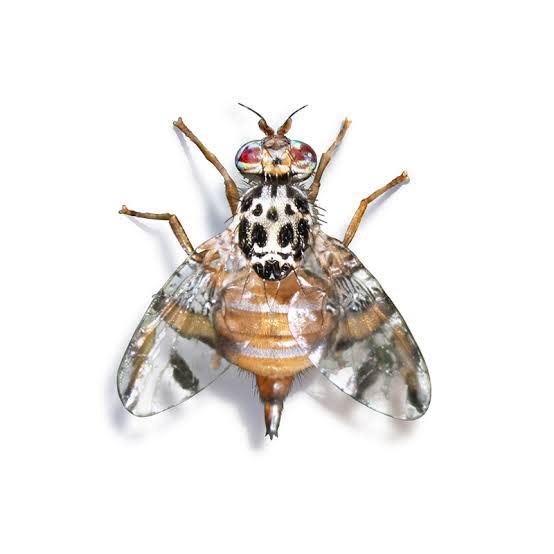
Ceratitis capitata adult

1.1 Research

1.1.1 Gut Microbiota

NoteFull-length 16S rRNA gene sequencing resolution reveals variable compositional features of Medfly gut microbiomes (2026)

Researchers: Charles J. Mason, Scott M. Geib
Read paper →

NoteDominance of Zygosaccharomyces and shifts in bacterial pathways: effects of antimicrobials on composition and diversity of the C. capitata bacterial and fungal microbiome (2026)

Researchers: Maria Cecilia Rasuk, Alfonsina Palladini
Read paper →

NoteEnterobacter supplement and ambient conditions determine the performance of sterile male Mediterranean fruit flies (2026)

Researchers: Panagiota Koskinioti, Nikos T. Papadopoulos
Read paper →

NoteCeratitis capitata microbiota and its effect on environmental stress tolerance: making flies stronger (2026)

Researchers: Alfonsina Palladini, Juan Rull
Read paper →

NoteEnterobacter-based dietary supplements in both larvae and adult diet affect thermal response of sterile males (2026)

Researchers: Georgia Papadogiorgou, Nikos T. Papadopoulos
Read paper →

NoteAntimicrobial feeding of parental adults reduces offspring tolerance to chemical stress in Ceratitis capitata (2026)

Last Author: Juan Rull
Read paper →

No papers added yet.

1.1.2 Gene Drives

NoteA novel polymerase III promoter for gene editing in Ceratitis capitata (2026)

Researchers: Philip T. Leftwich
Read paper →

NoteGenerating cisgenic sexing strains in insect pests (2026)

Researchers: Angela Meccariello
Read paper →

NoteDsiRNA-mediated silencing of C. capitata transformer or transformer-2 leads to masculinisation of XX embryos and systemic gene silencing in ovaries (2026)

Researchers: Gennaro Volpe, Giuseppe Saccone
Read paper →

NoteFunctional validation of a white pupae minimal gene construct in Ceratitis capitata (2026)

Researchers: Lucas Henrique Figueiredo Prates, Marc F. Schetelig
Read paper →

1.1.3 SIT

NoteProbiotic modulation of gut microbiota enhances immunity and nutrition in SIT C. capitata sterile males (2026)

Researchers: Kamel Charaabi, Meriem Msaad Guerfali
Read paper →

NoteHolobiont integrity in Ceratitis capitata enhances larval development: implications for the sterile insect technique (2026)

Researchers: Alfonsina Palladini, Juan Rull
Read paper →

1.1.4 Insecticide Resistance

NoteReduced fitness cost accounts for the stability of a malathion-resistant heterogeneous duplication haplotype in Ceratitis capitata field populations (2026)

Researchers: Rabeh Arouri, Félix Ortego
Read paper →

1.1.5 Ecology & Behaviour

NoteThermal acclimation and environment drive field dispersal patterns of adult Mediterranean fruit flies (2026)

Researchers: Eleftheria-Maria D. Bali, Nikos T. Papadopoulos
Read paper →

NoteAnalyzing Mediterranean fruit fly Ceratitis capitata dispersal from South to Northward in Türkiye (2026)

Researchers: Mohammed Ahmed Mohammed, Mehmet Bora Kaydan
Read paper →

NoteUrban-agricultural interface: assessing the effect of urban habitat characteristics on the occurrence of the Mediterranean fruit fly in peri-urban citrus orchards (2026)

Researchers: Carmel Katz, Yafit Cohen
Read paper →

NoteSeasonal reinfestation of Ceratitis capitata in continental climates: the role of fruit transport in Uşak Province (2026)

Researchers: (first author TBC), (last author TBC)
Read paper →

NoteNovel approaches for the detection of low-density Mediterranean fruit fly populations (2026)

Researchers: Eleftheria-Maria D. Bali, Nikos T. Papadopoulos
Read paper →

NoteChemical profile of the Mediterranean fruit fly Ceratitis capitata collected from different agricultural Egyptian systems (2026)

Researchers: Ismail R. El-Gendy, Abdelbaky A. Khodair
Read paper →

NoteBiological and biochemical effects of olive mill wastewater on Ceratitis capitata (2026)

Researchers: Tugberk Tuncyurek, Neslihan Gulec
Read paper →

NotePromising nutritional values of Anethum graveolens as a bioinsecticidal agent against Ceratitis capitata: attractancy and lethality (2026)

Researchers: Fatma Guesmi, Ahmed Landoulsi
Read paper →

NoteHorizontal and vertical transmission of Beauveria bassiana: effects on population growth rates in Ceratitis capitata (2026)

Researchers: Salvador Flores, Jorge Toledo
Read paper →

NoteSleep bout length and nighttime activity predict longevity in medflies (2026)

Researchers: Poorbita Kundu, Hans-Georg Müller
Read paper →

NoteEarly-life nutrition shapes adult responses to heat and cold in Ceratitis capitata (2026)

Researchers: Georgia Papadogiorgou, Nikos T. Papadopoulos
Read paper →

NoteEgg-stage desiccation reduces developmental recovery and reveals strain-dependent Wolbachia-associated costs in Ceratitis capitata (2026)

Researchers: M. Kamilari, A. A. Augustinos
Read paper →

NoteImpact of hydric stress during pupal development on adult morphology in Ceratitis capitata (2026)

Researchers: Paraschos N. Prekas, Nikos T. Papadopoulos
Read paper →

1.1.6 Methods

NoteA rapid and non-destructive method to discriminate irradiated Ceratitis capitata using near-infrared spectroscopy (2026)

Researchers: Peishih Liang, Charles J. Mason
Read paper →

NoteDeep learning-based classification of in vivo embryonic development stages in Ceratitis capitata using real-time microscopy images (2026)

Researchers: Tugberk Tuncyurek, Hanife Yandayan Genc
Read paper →

1.1.7 Nutrition & Reproduction

NoteEffects of essential amino acids on phagostimulation and reproduction in adults of the Mediterranean fruit fly (2026)

Researchers: David Nestel, M. Teresa Vera
Read paper →

1.1.8 Entomophagy & Novel Uses

NoteFrom pest to food ingredient: quality of Ceratitis capitata larvae submitted to different methods of killing and drying (2026)

Researchers: Natasha Spindola Marasca, Vilásia Guimarães Martins
Read paper →

1.2 Researchers

NotePhilip Leftwich

Affiliation: University of East Anglia, UK
Themes: Gut microbiota, gene drives, CRISPR tooling
Personal website →

NoteTracey Chapman

Affiliation: University of East Anglia, UK
Themes: Gut microbiota, gene drives
Google Scholar →

NoteCharles J. Mason

Affiliation: USDA-ARS, USA
Themes: Gut microbiome composition, SIT quality control
Google Scholar →

NoteAngela Meccariello

Affiliation: Imperial College London, UK
Themes: Cisgenic sexing strains, gene drives
Google Scholar →

NoteNikos T. Papadopoulos

Affiliation: University of Thessaly, Greece
Themes: Dispersal, thermal biology, gut microbiota, development

NoteAlfonsina Palladini

Affiliation: (TBC — Argentina)
Themes: Microbiota, stress tolerance, SIT, holobiont